
Dive into the world of personalized direct marketing where tailored strategies make all the difference in today’s competitive business landscape. From data analytics to customer engagement, this topic covers it all!
Get ready to explore the realm of personalized marketing and discover how businesses can thrive by connecting with customers on a personal level.
Introduction to Personalized Direct Marketing
Personalized direct marketing refers to the practice of tailoring marketing messages and offers to individual customers based on their preferences, behaviors, and demographics. It involves using data and technology to create targeted campaigns that resonate with recipients on a one-to-one level.
In today’s business environment, personalized marketing has become increasingly important due to the rise of digital channels and the abundance of customer data available. With consumers being bombarded with generic advertising messages, personalized direct marketing allows companies to cut through the noise and deliver relevant content that captures the attention of their target audience.
How Personalized Direct Marketing Differs from Traditional Mass Marketing Strategies
- Personalized direct marketing focuses on building relationships with individual customers, whereas traditional mass marketing aims to reach a broad audience with a one-size-fits-all message.
- Personalized marketing leverages data and analytics to segment customers and deliver tailored messages, while mass marketing relies on broad demographic categories.
- Personalized direct marketing emphasizes customer engagement and interaction, leading to higher levels of customer satisfaction and loyalty, compared to the more passive approach of mass marketing.
Strategies for Personalized Direct Marketing
Personalized direct marketing relies heavily on data analytics to create targeted and effective campaigns that resonate with individual customers. By analyzing customer data, marketers can tailor their messaging and offers to meet the specific needs and preferences of each customer segment.
Role of Data Analytics
Data analytics plays a crucial role in personalized direct marketing by helping marketers understand customer behavior, preferences, and buying patterns. By analyzing data from various sources such as website interactions, purchase history, and demographic information, marketers can create detailed customer profiles and segment their audience effectively.
- Utilizing predictive analytics to anticipate customer needs and preferences
- Identifying patterns and trends in customer behavior to personalize marketing messages
- Measuring the effectiveness of personalized campaigns through data analysis
Personalized Marketing Tactics
There are various tactics that marketers can use to personalize direct marketing campaigns, including:
- Personalized Emails: Sending customized emails with relevant product recommendations based on past purchases or browsing behavior.
- Targeted Advertisements: Displaying ads to specific customer segments based on their interests, location, or demographic information.
- Customized Product Recommendations: Offering personalized product suggestions on the website or through email marketing to enhance the shopping experience.
Segmentation and Targeting
Segmentation and targeting are essential components of personalized marketing as they allow marketers to divide their audience into distinct groups and tailor their marketing efforts accordingly.
- Segmenting customers based on demographics, behavior, or psychographics to create targeted campaigns
- Targeting specific customer segments with personalized messages and offers to increase engagement and conversion rates
- Using segmentation to deliver the right message to the right person at the right time
Benefits of Personalized Direct Marketing
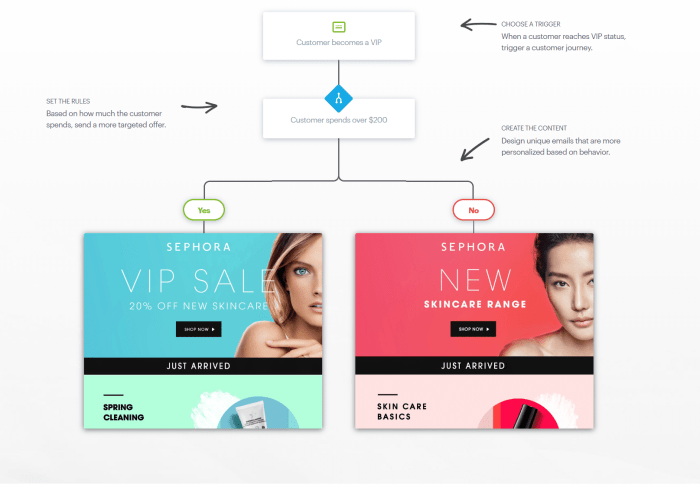
Personalized direct marketing offers numerous advantages for businesses looking to connect with their target audience in a more meaningful way. By tailoring marketing messages to individual preferences and behaviors, companies can see increased engagement, higher conversion rates, and improved customer loyalty.
Increased Customer Engagement
- Personalized marketing efforts grab the attention of customers by addressing their specific needs and interests.
- By delivering relevant content, businesses can create a more personalized and engaging experience for their audience.
- Customers are more likely to interact with personalized messages, leading to higher response rates and increased brand engagement.
Higher Customer Loyalty
- Personalized marketing helps build stronger relationships with customers, increasing their loyalty to the brand.
- By showing that the company understands and values their preferences, customers are more likely to remain loyal over time.
- Repeat purchases and long-term customer relationships are fostered through personalized marketing efforts.
Success Stories
Company X saw a 20% increase in sales after implementing personalized direct marketing strategies tailored to individual customer preferences.
Company Y experienced a 30% boost in customer retention rates by sending personalized messages based on past purchase history.
Challenges and Considerations in Personalized Direct Marketing
Implementing personalized marketing strategies can come with its own set of challenges that businesses need to navigate effectively. It is crucial to address these challenges to ensure a successful personalized marketing campaign that resonates with customers.
Common Challenges Faced in Personalized Marketing
- Difficulty in collecting accurate customer data for personalization
- Ensuring data privacy and security while leveraging customer information
- Creating personalized content at scale for a large customer base
- Balancing between customization and intrusion to avoid overwhelming customers
- Managing customer expectations and delivering on personalized promises
Importance of Customer Privacy and Data Security
Maintaining customer privacy and data security is paramount in personalized marketing efforts to build trust and credibility with customers. It is essential to adhere to data protection regulations and ensure that customer data is handled responsibly to prevent any breaches or misuse.
Ways to Overcome Personalization Challenges
- Invest in robust data collection and analysis tools to gather accurate customer information
- Implement strict data protection measures to safeguard customer data and build trust
- Utilize automation and AI technologies to personalize content efficiently and effectively
- Seek feedback from customers to understand their preferences and improve personalization efforts
- Continuously optimize and refine personalized marketing strategies based on performance metrics and customer feedback
Comparison with Telemarketing, Direct Marketing, and Affiliate Marketing
Personalized direct marketing, telemarketing, traditional direct marketing, and affiliate marketing are all essential strategies in the marketing world, each with its unique approach and benefits. Let’s delve into how personalized direct marketing stands out in comparison to these other forms of marketing.
Differentiation from Telemarketing
Telemarketing involves engaging with potential customers over the phone to promote products or services. While telemarketing focuses on direct communication, personalized direct marketing goes a step further by tailoring messages and content to individual customers’ preferences and behaviors. This personalized approach helps in building stronger relationships with customers and enhancing engagement levels.
Comparison with Traditional Direct Marketing
Traditional direct marketing typically involves mass marketing tactics such as sending out the same message to a large audience through channels like mail or email. In contrast, personalized direct marketing leverages data and technology to create customized messages for specific target segments. This personalized approach results in higher response rates, increased customer loyalty, and ultimately better return on investment (ROI) compared to traditional direct marketing methods.
Affiliate Marketing vs. Personalized Marketing Strategies
Affiliate marketing relies on collaborating with third-party influencers or affiliates to promote products or services to their audience in exchange for a commission. While affiliate marketing focuses on leveraging the influence of external partners, personalized marketing strategies prioritize building direct relationships with customers based on their unique preferences and behaviors. By tailoring messages and offers to individual customers, personalized marketing strategies can create a more personalized and engaging experience, leading to higher conversion rates and customer retention.
Last Word
As we conclude our journey through personalized direct marketing, remember that understanding your audience and delivering customized experiences can lead to unparalleled success in the modern business world. Embrace personalization and watch your business flourish!
User Queries
How can personalized direct marketing benefit my business?
Personalized direct marketing can lead to higher customer engagement, increased loyalty, and better overall ROI for your business.
What are some common challenges in implementing personalized marketing strategies?
Businesses often face challenges with maintaining customer privacy, data security, and overcoming personalization obstacles while ensuring a positive customer experience.
How does personalized direct marketing differ from traditional direct marketing methods?
Personalized direct marketing focuses on creating unique, tailored experiences for individual customers, whereas traditional direct marketing tends to target broader audiences with less customization.


